Labels
Drawn for the card.
Not for the template.
Most graders print one label and change the words. Ours takes the card’s own artwork across the whole label, so a slab reads as the card it holds from across a room.


The front
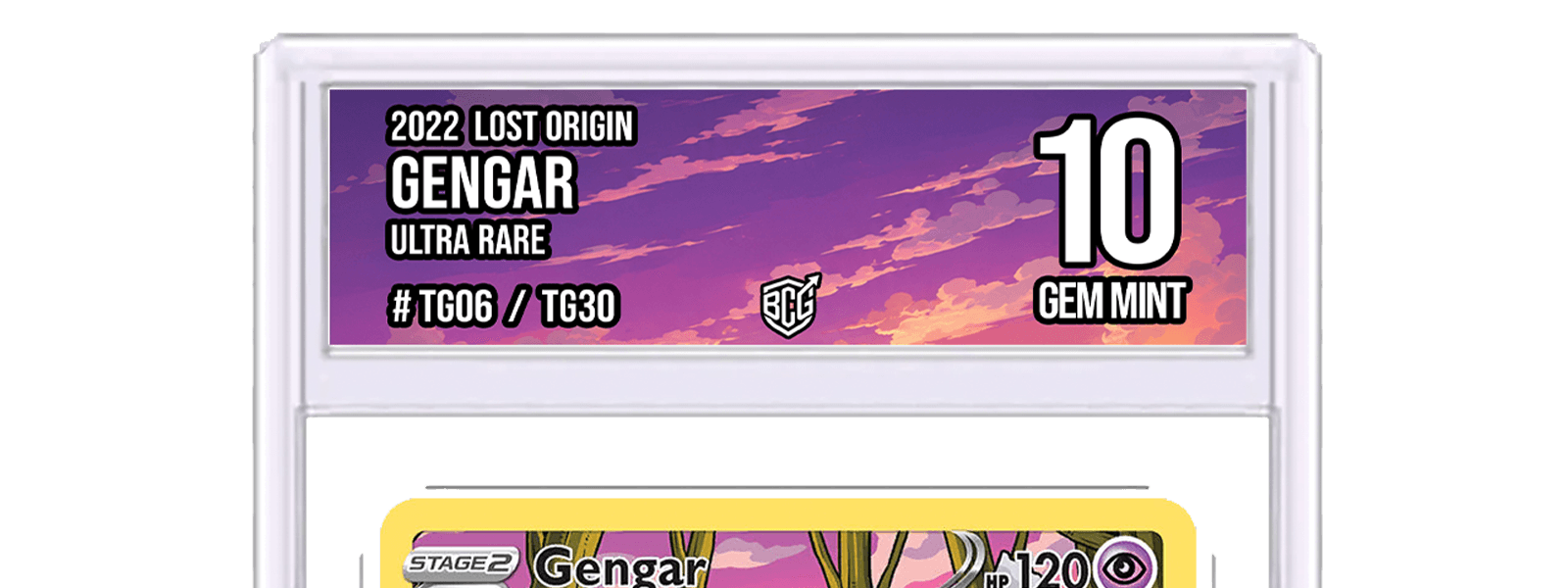
What the card is.
Everything needed to identify the card without taking it out of the case, over artwork taken from the card itself.
- Year and set
- The printing this copy came from, not just the character.
- Card name
- Large enough to read across a table or on a shelf.
- Rarity
- As the set itself prints it — Ultra Rare, Illustration Rare, Promo.
- Card number
- Including the set size, so TG06/TG30 stays meaningful out of context.
- The grade
- The number and the words. A 10 says Gem Mint, because not everybody counts in tens.
- Full-bleed artwork
- Drawn from this card's own art and reused for every copy of it we grade.
The back
How the grade was reached.
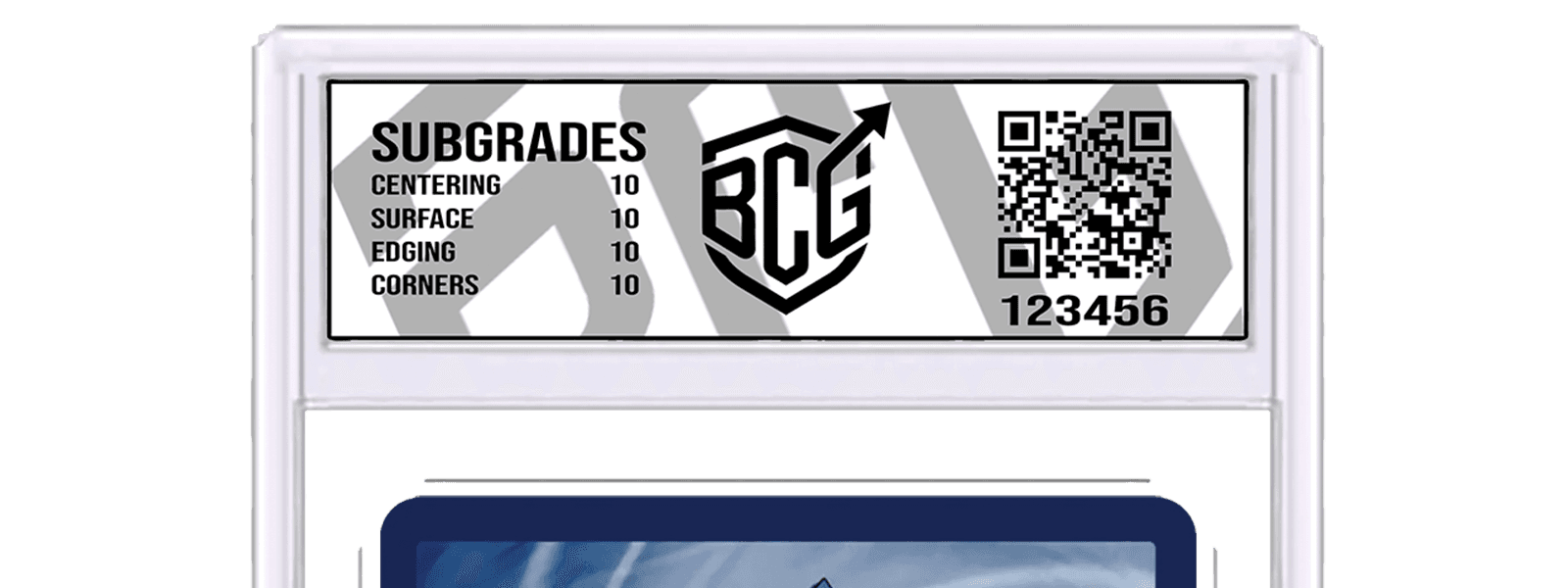
The working, on the slab. Four scores rather than one number you are asked to take on trust.
- Four subgrades
- Centering, surface, edging and corners, each scored on its own.
- Certificate number
- Unique to this card, issued when it was booked in and never reused.
- Scannable code
- Opens the public certificate for this exact card.
How they are made
Once per card, then forever.
Artwork is drawn against the card rather than the submission, so the work is done once and every copy after that is quick.
First of its kind
Send a card nobody has sent before and its label is drawn from scratch. That is real work, and it is why a brand-new card takes a little longer than a common one.
Filed against the card
The design is stored against the card's name, number and set — so the next Charizard from that set finds it automatically, whoever sends it.
Only the number changes
Every copy after the first reuses the artwork and takes its own certificate number. Same design, different card, no waiting.
The submission form tells you which of your cards already have a design and which are being drawn for the first time, before you pay — so a slower card is something you knew about rather than something you noticed afterwards.
Start a submissionEvery number on the back is checkable.
Scan the code or type the certificate number and you get the four subgrades, the grade they produced and the card they belong to. It works for anybody holding the slab, not just the person who sent it in.

